Two listings show the same player and design. One card is in a sleeve; the other sits inside a labelled holder with a grade. Should you pay more for the second one?
Raw vs graded cards is not a decision you can make from the number alone. Start with what you want to own, then consider the card’s identity, condition, documentation and total price.
What the holder tells you
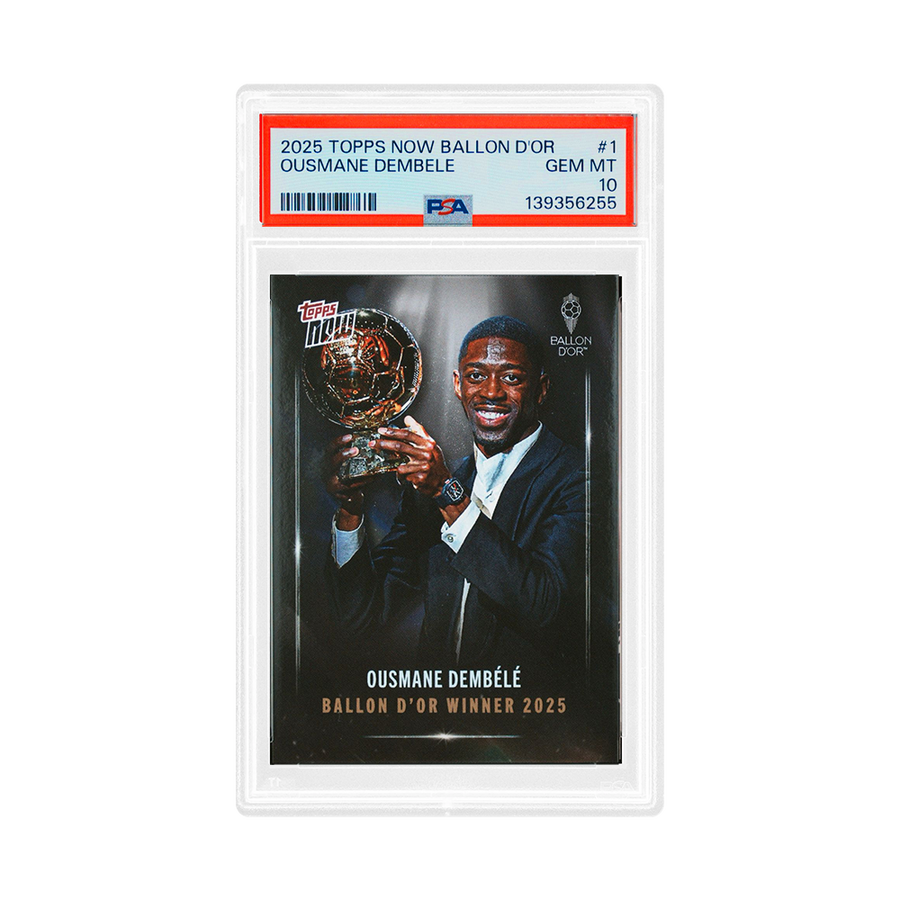
A raw card has not been encapsulated with a professional grade. For a graded card, read the grading company’s label carefully: the year, set, player, card number and variant should describe the item inside.
PSA’s grading standards explain how physical characteristics such as corners, surface and centering affect its assessment. The grade describes condition under that company’s standards; it does not tell you whether the card is the right purchase for your collection.
Also check what has actually been graded. Where an autograph grade appears, do not assume it is the card’s condition grade. Read every label field rather than focusing on the largest number.
A lower grade can still suit your collection
If you are choosing a card for the photograph, player or personal memory, ask whether the visible condition bothers you. You may prefer an affordable example of the card you really want over a higher-grade example of something you feel less connected to.
Look at both sides, including corners and edges, and request clearer photographs when needed. With a raw card, do not turn “looks clean in this image” into a prediction of a future grade. A photograph cannot show every surface issue or substitute for an in-hand assessment.
Check the certificate, then compare the details
For a PSA-certified card, use PSA’s official certificate lookup. Compare the returned record with the label and item being offered.
PSA notes that certification numbers can be copied, so a successful lookup alone does not remove risk. Consider the seller, the holder’s condition and any inconsistencies in the listing. Ask questions before paying if something does not line up.
Do the full calculation before submitting a raw card
If you are thinking of buying raw and submitting it for grading, list the purchase price, submission charges, shipping and any other applicable costs. Read the grading service’s current terms directly.
Then ask a more personal question: would you still want this card if the grade came back lower than you hoped? If the answer is no, an already graded example may be easier to evaluate. A submission is not a promise of a particular result or a higher resale price.
Choose the card you will enjoy looking at
The holder can be useful, but the collection is yours. Set your condition preference before browsing so a bigger number does not distract you from the player, design or edition you originally wanted.
Compare PSA-graded cards at TBRC with the wider single-card collection. Read each listing closely; the wider collection may include both graded and ungraded examples.